Ramesh M

Propulsion & thermal-fluid engineer

Download resume ↓

PROPULSION · THERMAL-FLUIDS · CFD

From model to measurement to engineering decision.

I’m Ramesh M. I connect numerical analysis, design and hardware testing to understand how thermal and fluid systems behave, where a model is useful, and where its limits matter.

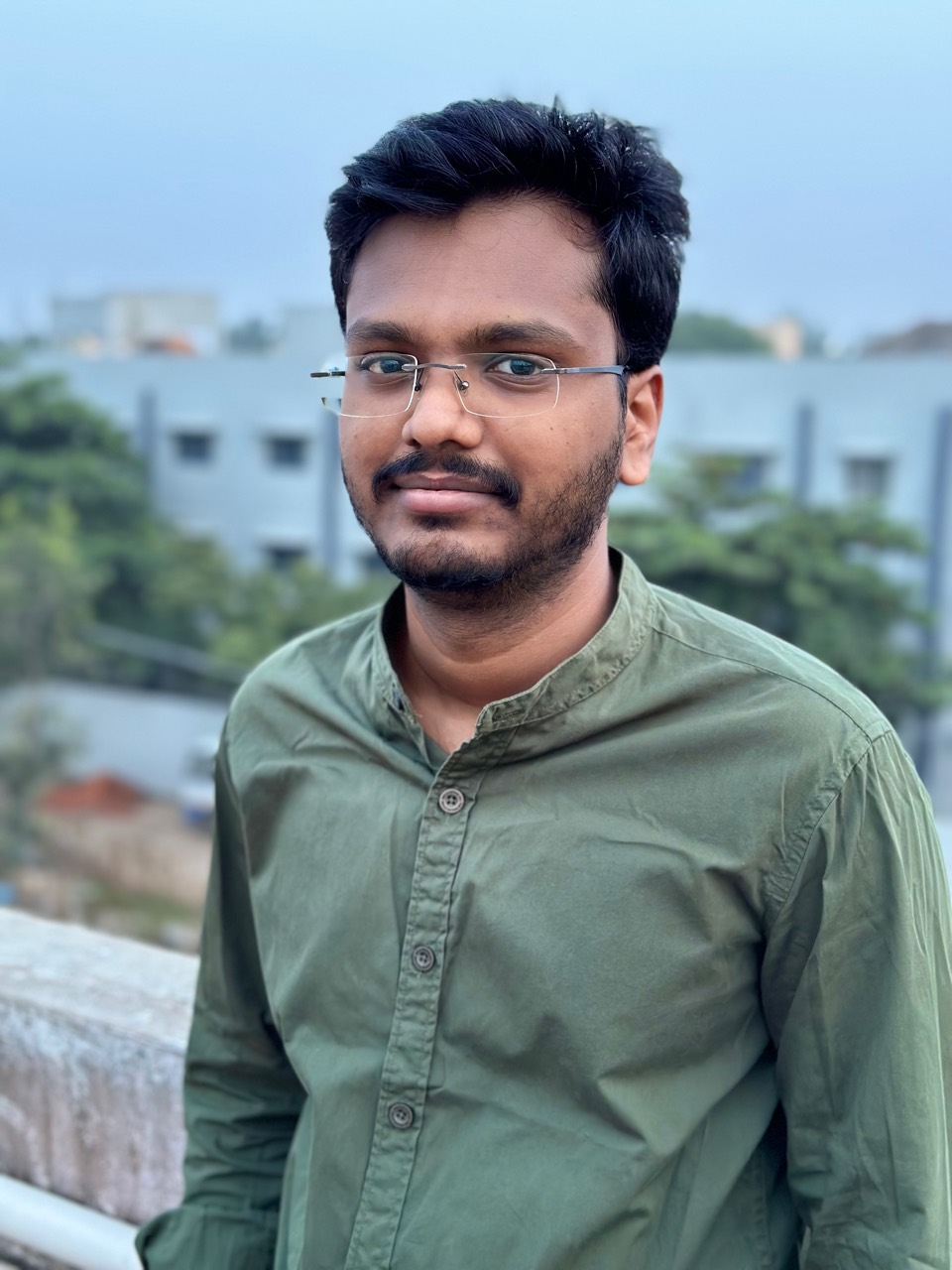
Ramesh outdoors in a casual portrait

EXPERIENCE

Where I’ve worked and studied.

My work combines OpenFOAM, ANSYS Fluent, Python and hands-on qualification.

  1. Aug 2026 – present

    CFD Engineer

    Praan Inc. · Mumbai

    • Analyse airflow and pressure losses in air-purification systems using OpenFOAM and Fluent to identify restrictions and assess design changes.
    • Develop parametric fan housings, ducts and filter layouts in Fusion 360, balancing airflow requirements with packaging and manufacturing constraints.
    • Write Python tools for geometry generation, CFD preparation and post-processing, making design studies easier to repeat.
    • Conduct fan-speed, clean-air delivery rate (CADR) and noise tests across operating modes, documenting filter conditions and measurement limitations.
    • Optimised the OpenFOAM solver, substantially cutting steady-state runtime, while assessing mesh-dependent settings, convergence checks and numerical precision before reuse in other cases.
  2. Jun 2025 – Jul 2026

    Propulsion Engineer

    Agnikul Cosmos · Chennai

    • Took flight check valves from P&ID-based requirements through supplier assessment, procurement and qualification, supporting their release for flight.
    • Prepared test fixtures and procedures, conducted functional and leak tests, and coordinated thermal, vibration and cryogenic qualification activities.
    • Developed an OpenFOAM conjugate heat-transfer workflow for regenerative engine cooling, coupling hot-gas loading, wall conduction and coolant flow.
    • Analysed cooling-manifold flow distribution and pressure losses to guide geometry changes.
    • Compared coolant-temperature predictions with firing measurements, accounting for differences in operating conditions and instrumentation.
  3. Jul 2023 – Jun 2025

    MTech, Thermal and Propulsion

    Indian Institute of Space Science and Technology · Thiruvananthapuram

    • Investigated methane-air flame stabilisation in a swirl and bluff-body burner using reacting-flow CFD in ANSYS Fluent.
    • Examined how recirculation, mixing and scalar dissipation influence flame anchoring across lean operating conditions.
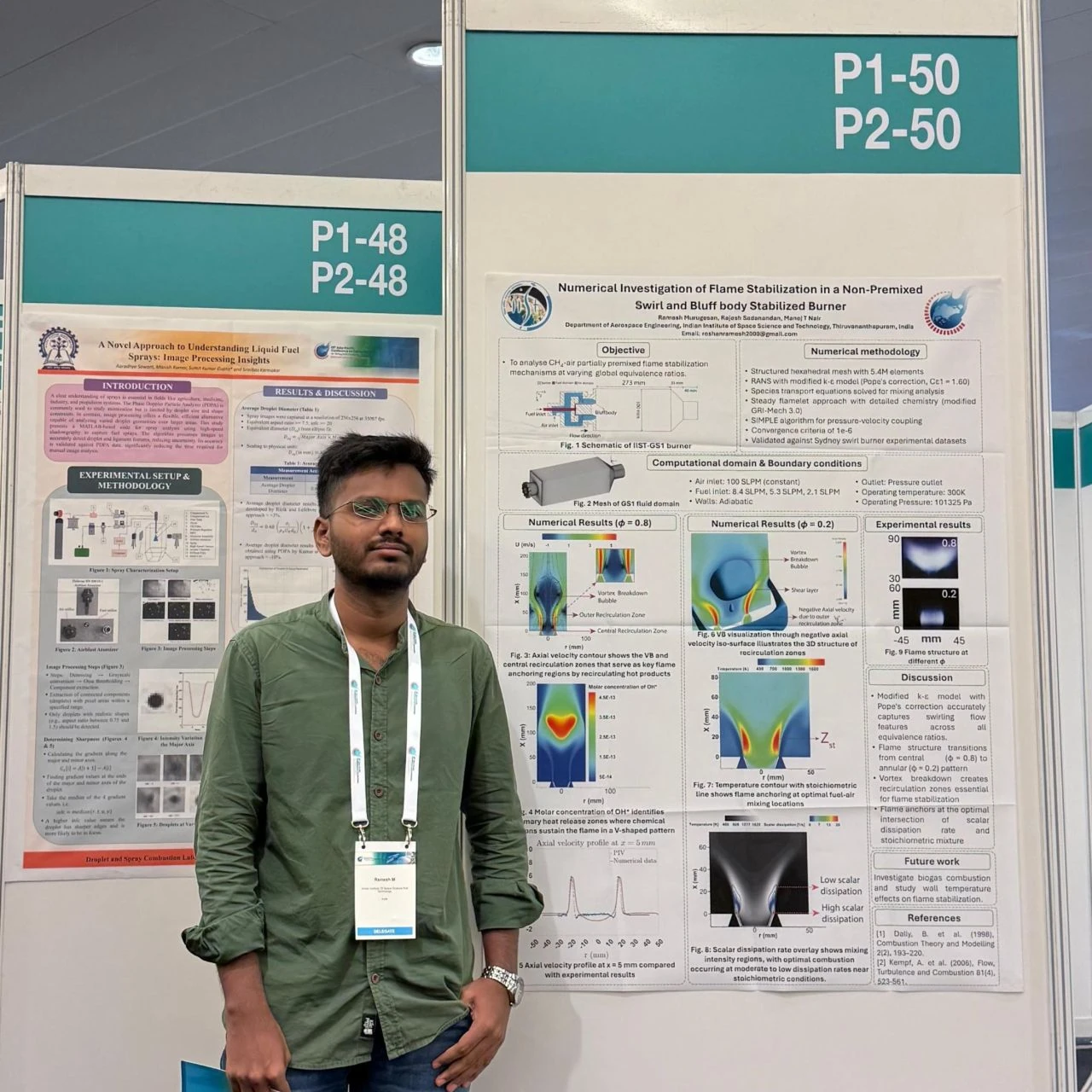
    • Assessed numerical predictions against benchmark and laboratory measurements, and presented the research as a work-in-progress poster at ASPACC 2025.
  4. Jul 2021 – Jun 2023

    Design Engineer

    MaDeIT Innovation Foundation · Chennai

    • Translated requirements from incubated deep-tech startups into mechanical CAD models and engineering analyses using CATIA V5 and ANSYS Workbench.
    • Designed a carbon-fibre monocoque UAV airframe and evaluated static, drop and aerodynamic loading through structural and fluid–structure interaction analyses.
  5. Apr 2021 – Jun 2021

    Project Intern

    DRDO Centre for Airborne Systems · Bangalore

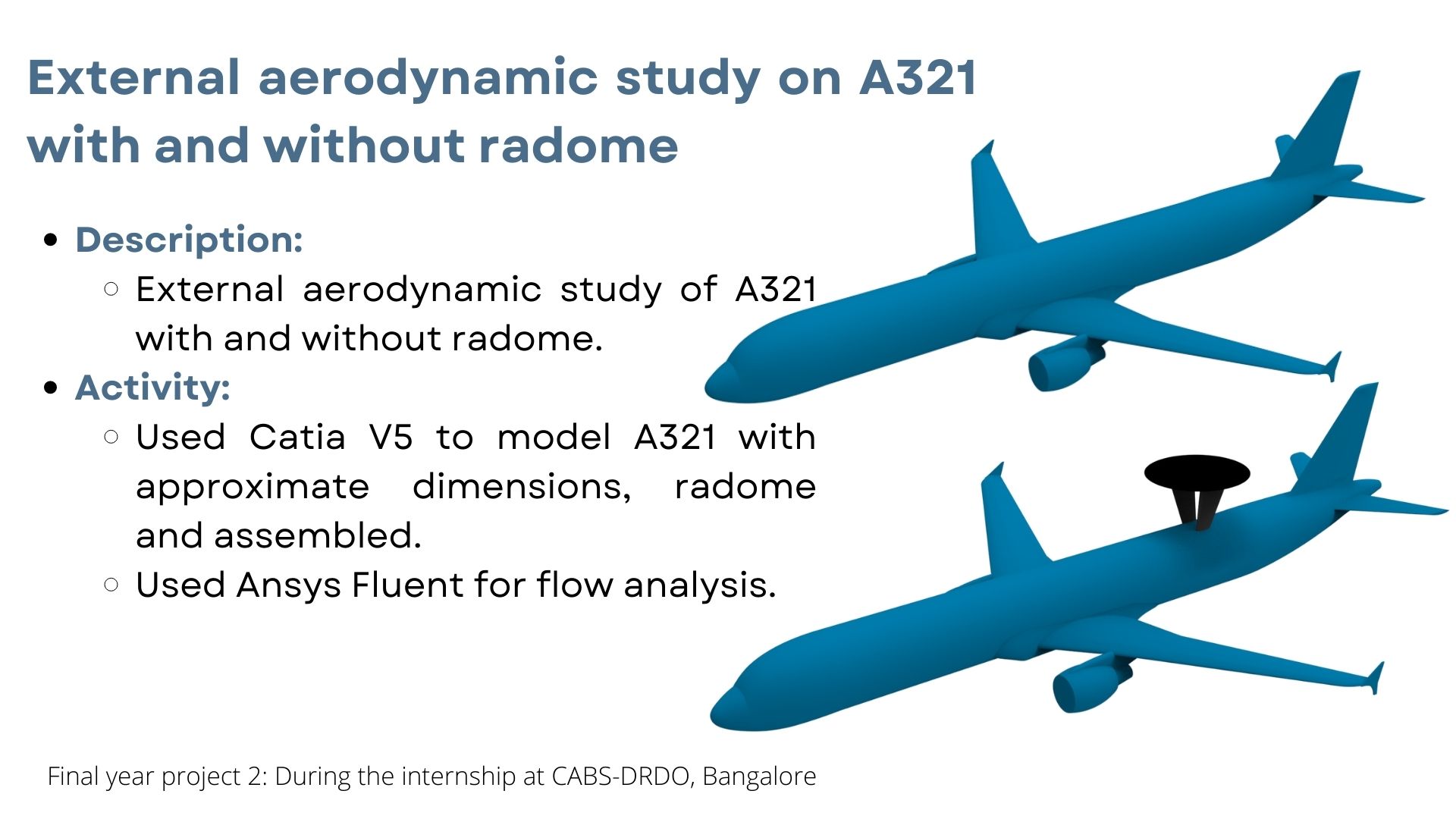
    • Compared the external aerodynamics of an A321 airframe with and without a radome using CFD to assess the installation’s aerodynamic effects.
  6. May 2017 – May 2021

    B.E., Aeronautical Engineering

    Kumaraguru College of Technology · Anna University · Coimbatore

    • Led a four-person UAV flight-systems team, contributing to aircraft design, analysis and fabrication.
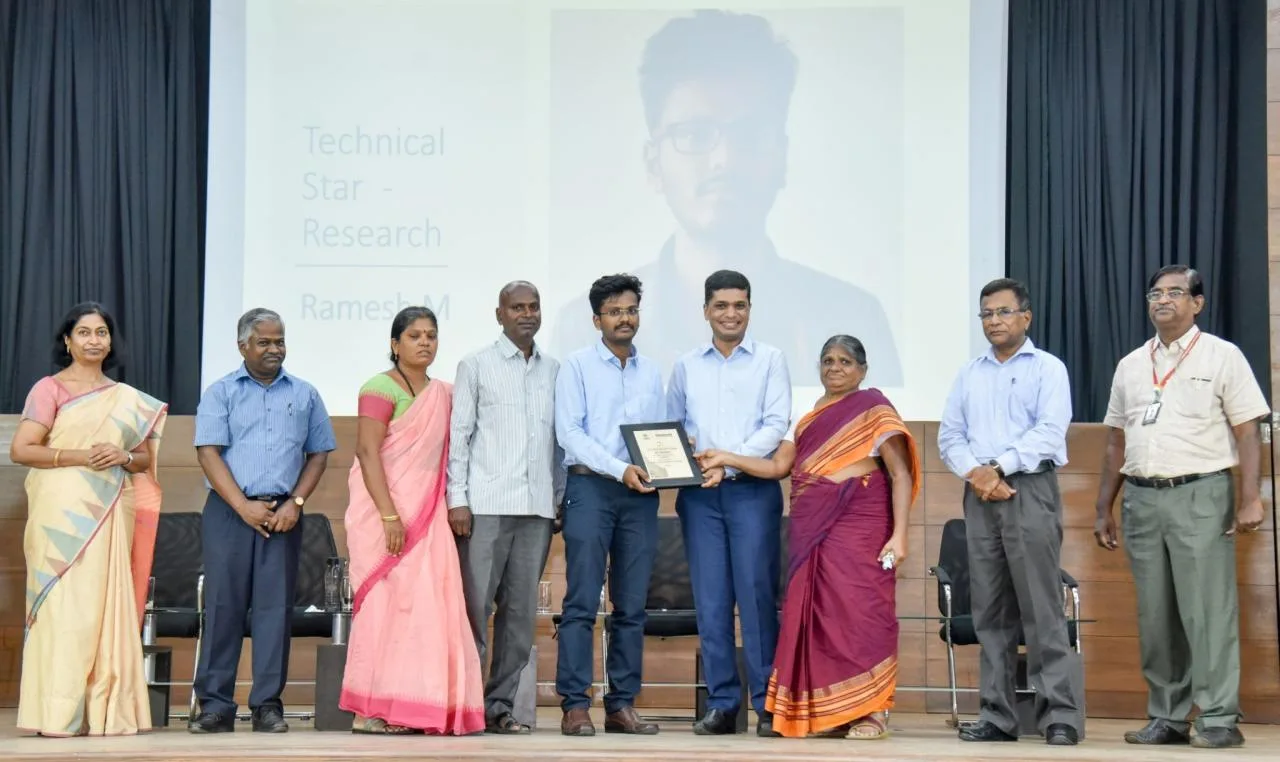
    • Graduated with First Class with Distinction; received the Technical Star – Research award for work during my undergraduate years.

≈ 13.8 billion years ago

The Big Bang

The original reacting flow. Mesh-independence study pending.

Selected projects (3)

FROM MY MTECH THESIS

See the flow.
Then explain the flame.

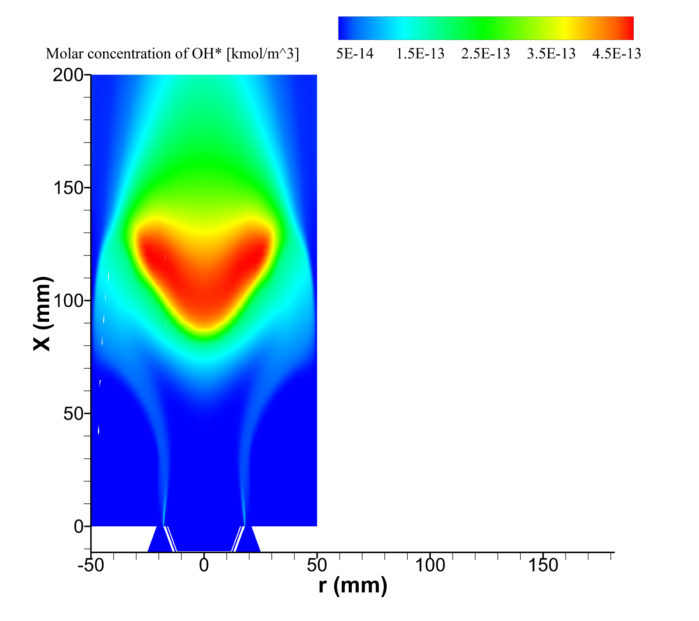
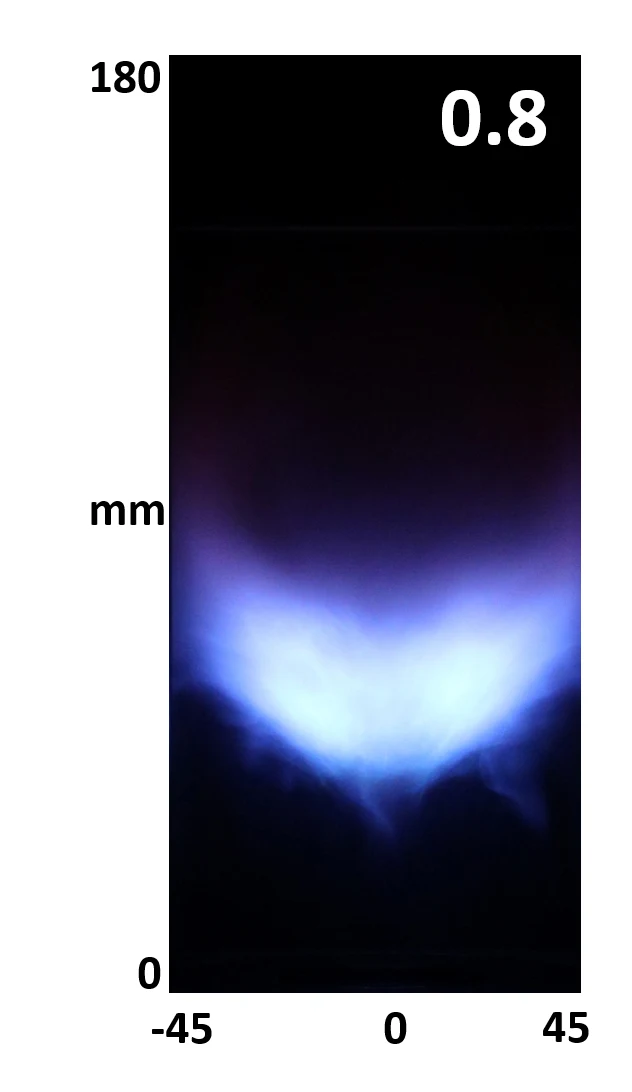
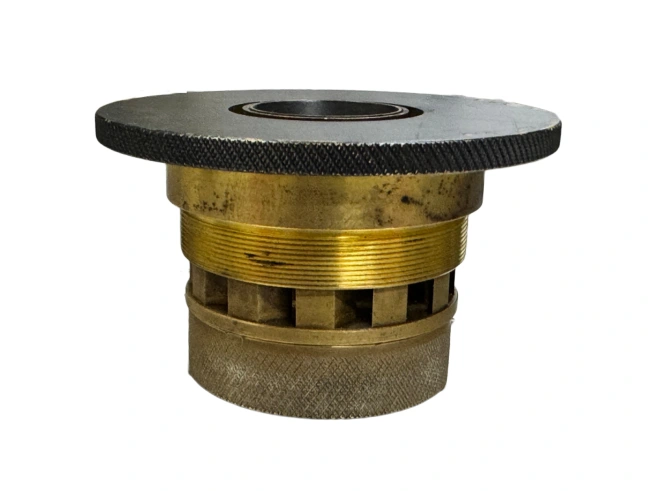
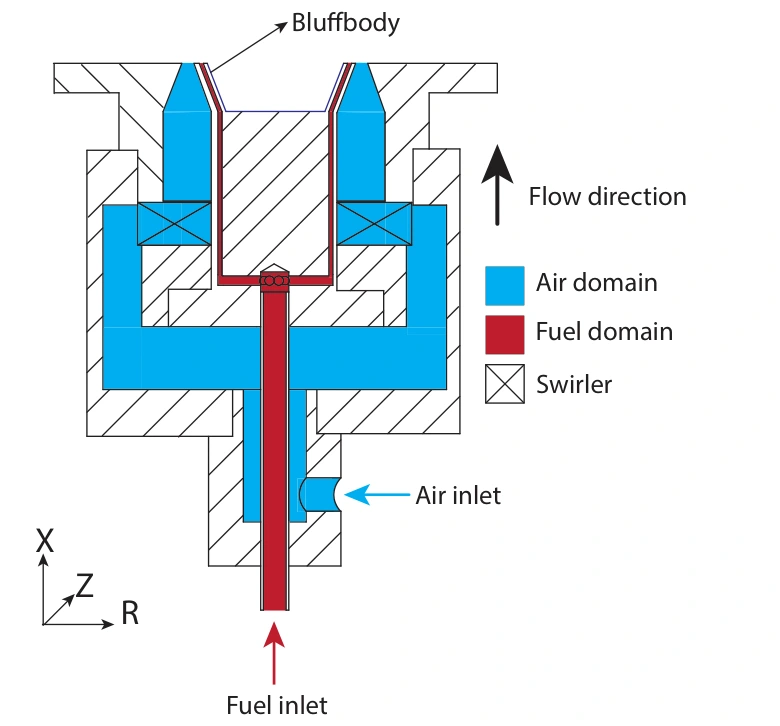
Geometry, mesh and numerical results from my MTech study of methane-air flame stabilisation in the IIST-GS1 burner. I used Fluent and benchmark and experimental comparisons to assess the model and interpret flame anchoring. Select any figure to inspect it at full size.

REACTING FLOW · CFD vs EXPERIMENT · φ = 0.8

Computed OH-star molar concentration contour for phi 0.8, showing a heart-shaped heat-release zonePhotograph of the measured flame at phi 0.8
OH* (CFD) · Thesis Fig. 7.21 · p. 77Measured flame · laboratory team
Photograph of the IIST GS1 swirl and bluff-body burner, thesis figure 7.1Section drawing of the GS1 burner showing fuel and air passages, swirler and bluff body
FIGS 7.1–7.2 · IIST-GS1Burner and section drawingThe burner and its section: air and fuel passages, swirler and bluff body. Thesis pp. 55–56.
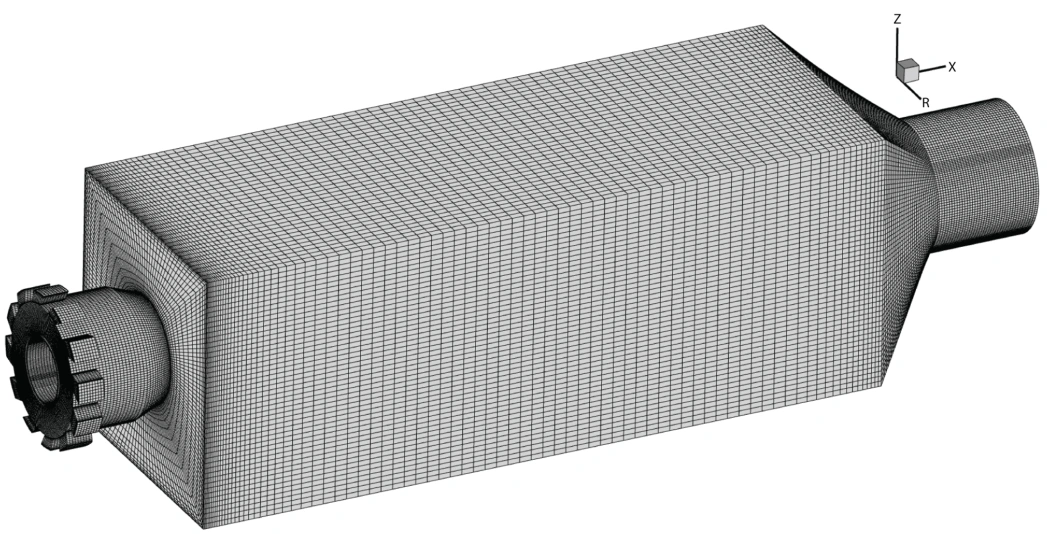
Three dimensional mesh of the GS1 burner and downstream computational domain
FIG 7.6 · COMPUTATIONAL DOMAINComputational domain and meshThe computational domain used for the numerical study. Thesis p. 59.
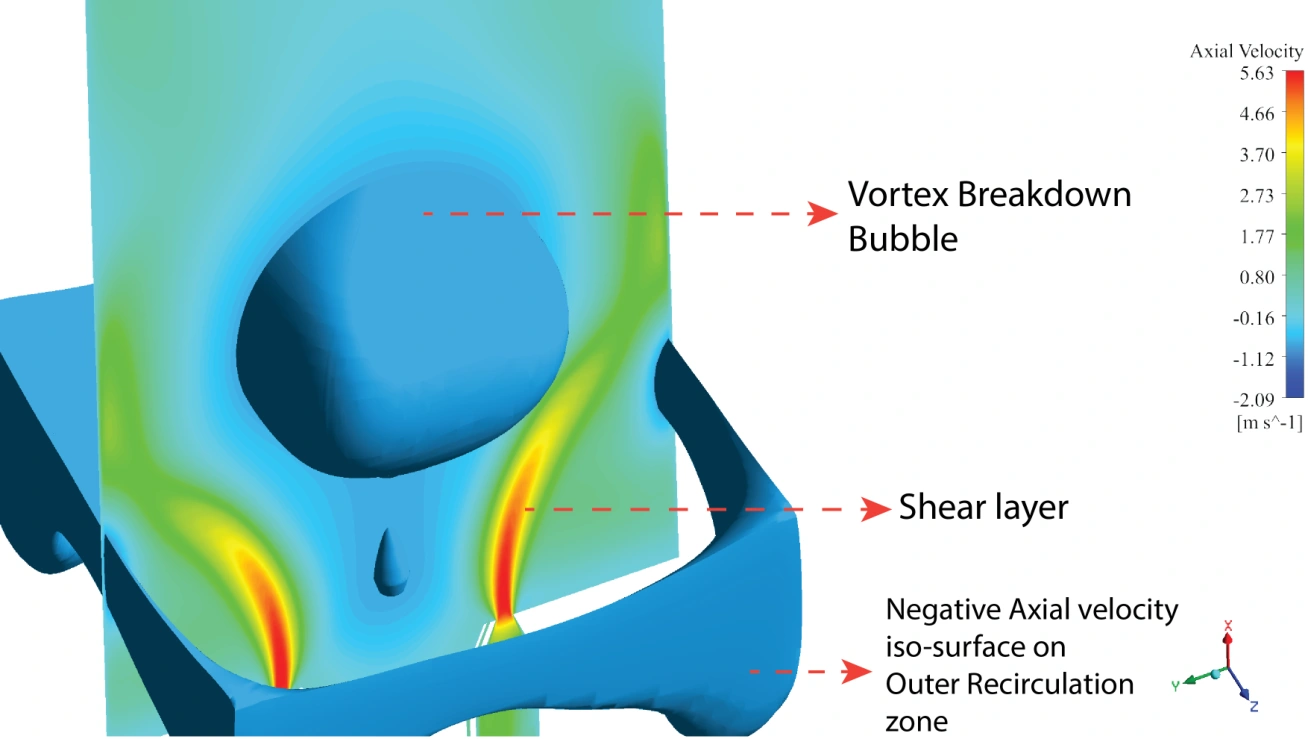
Three dimensional negative axial velocity iso-surface showing the large vortex breakdown bubble in the phi 0.2 case
FIG 7.27 · φ = 0.2Vortex-breakdown bubbleA negative axial-velocity iso-surface reveals the three-dimensional recirculation structure in the ultra-lean case. Thesis p. 83.
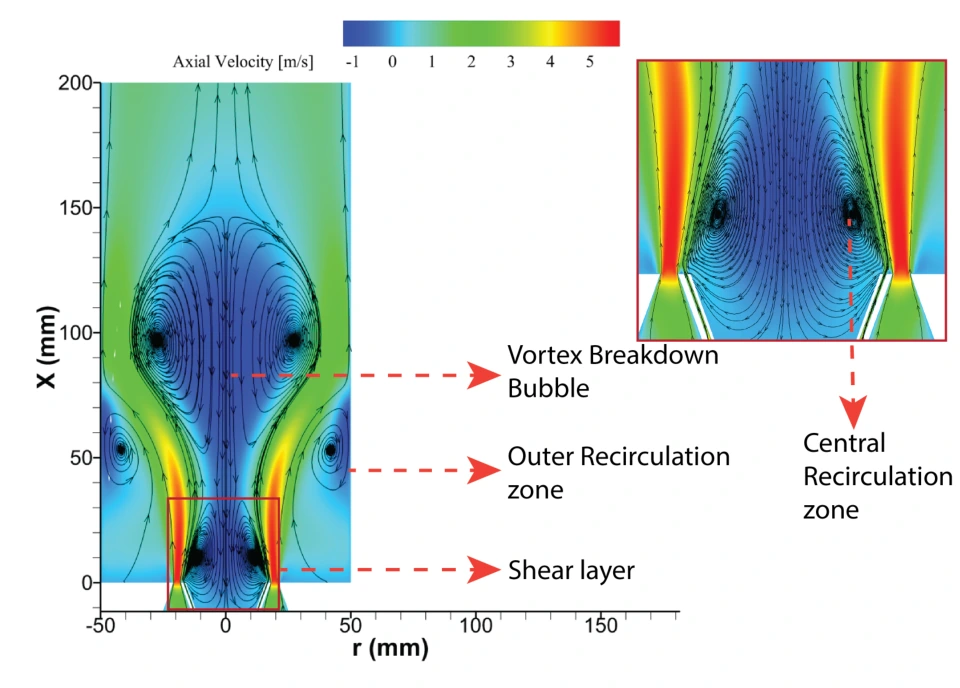
Annotated axial velocity and streamlines showing recirculation at phi 0.8
FIG 7.13 · φ = 0.8Recirculation zonesAxial velocity and streamlines identify the flow regions used in the flame analysis. Thesis p. 68.
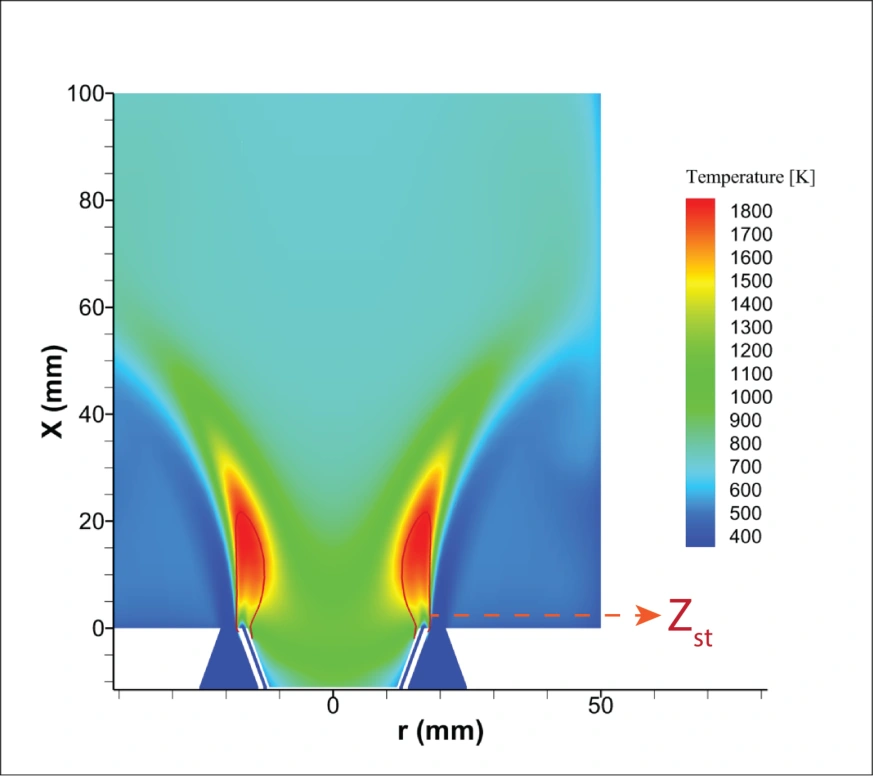
Temperature with stoichiometric mixture fraction line for phi 0.2
FIG 7.37 · φ = 0.2Stoichiometric line on temperatureThe stoichiometric mixture-fraction line is overlaid on temperature. Thesis p. 97.
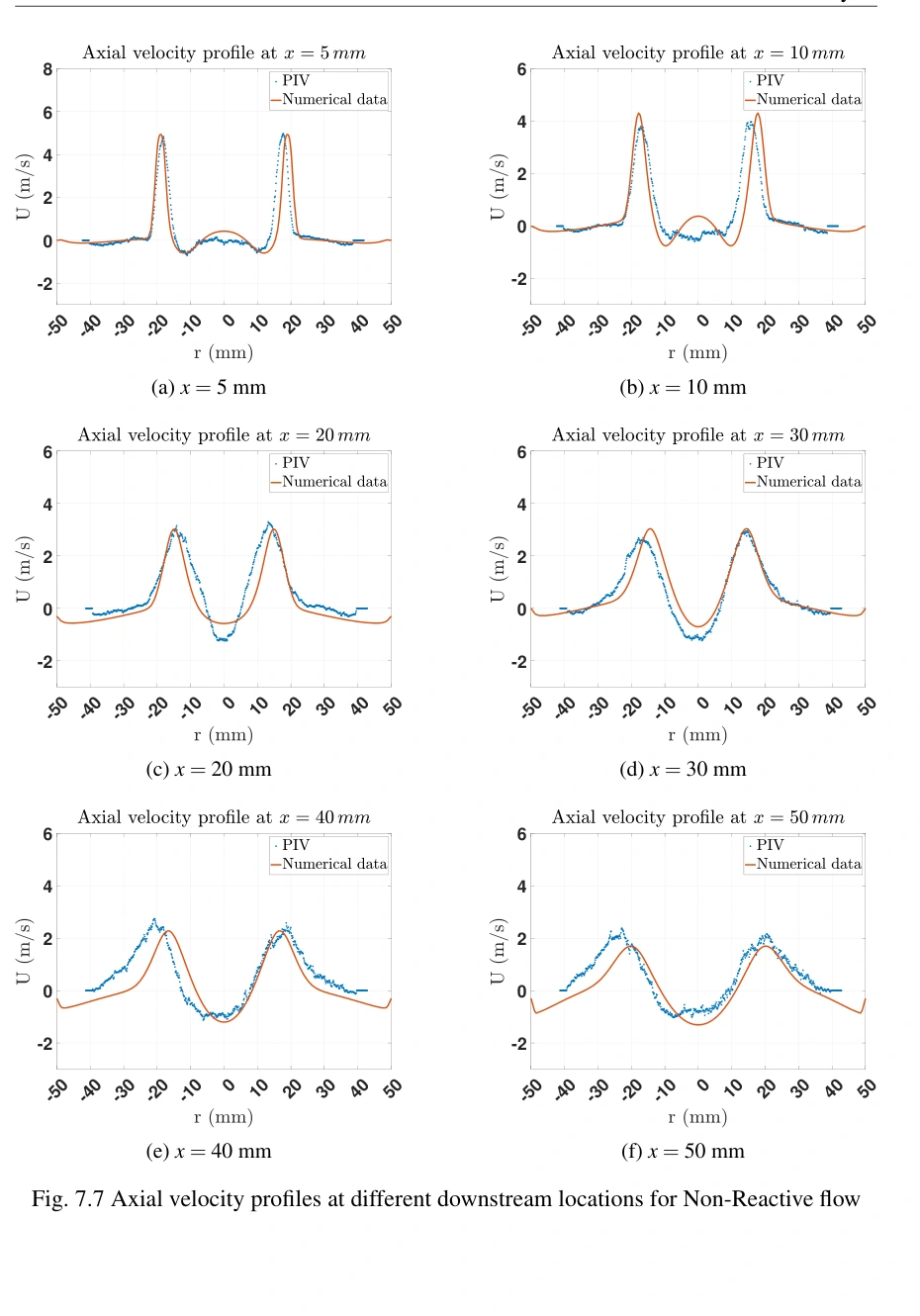
Axial velocity profiles at six downstream stations in the non-reacting burner flow
FIG 7.7 · NON-REACTING FLOWNon-reacting velocity profilesAxial velocity profiles at six downstream stations. Thesis p. 62.

Source: Ramesh M, MTech thesis, IIST (2025). The numerical figures describe steady mean-flow predictions; the non-reacting profiles are labelled separately. My main contribution was the Fluent numerical investigation; the laboratory team conducted the PIV and flame measurements. Read the research summary (PDF) ↗

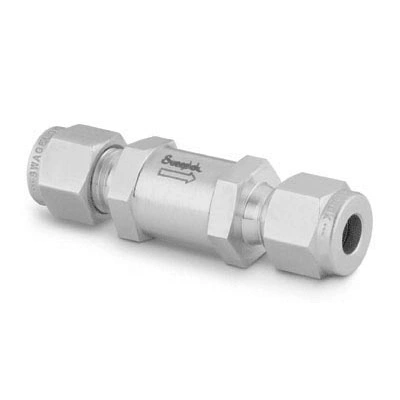
Representative valve type: Swagelok poppet check valve, catalogue photograph
REPRESENTATIVE VALVE TYPESwagelok poppet check valveImage: Swagelok catalogue ↗
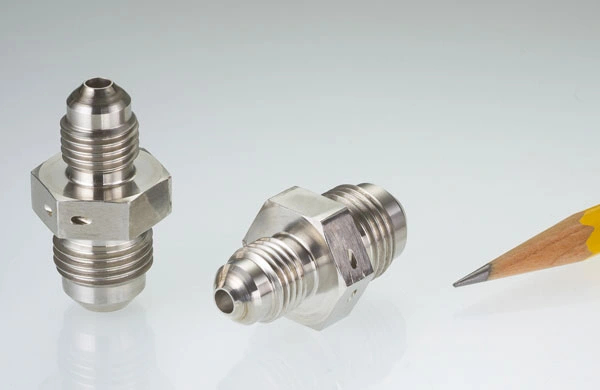
Representative valve type: The Lee Company cryogenic check valve, product announcement image
REPRESENTATIVE VALVE TYPEThe Lee Company cryogenic check valveImage: Lee Company announcement / Control Engineering Europe ↗
FLIGHT COMPONENTS · AGNIKUL COSMOS

Taking check valves from requirements to qualification

I worked across selection, supplier coordination and test execution for flight check valves.

Problem
Choose components against stage-level functional needs and establish evidence that they could meet the qualification programme.
My contribution
Translated P&ID needs into cracking-pressure and flow requirements, assessed suppliers, supported sourcing, and prepared fixtures and procedures. I conducted functional and leak testing and coordinated or reviewed other qualification work.
Method & evidence
The programme included functional, leak, thermal, vibration and LN2 cryogenic checks, with acceptance and qualification records reviewed across the process.
Engineering decision
Used test outcomes and supplier evidence to close component requirements and take the valves through flight qualification.
HOT GAS →AInjectorThroatNozzle exit← coolant flows toward the injectorSECTION AWALLouter jacketCOOLANTchannelWALLliner · hot wallHOT GAScombustion productsq
REGENERATIVE COOLING · AGNIKUL COSMOS

Connecting gas-side loading to coolant return

I built an OpenFOAM conjugate heat-transfer workflow for regenerative rocket-engine cooling.

Problem
Estimate how hot-gas loading, wall conduction and coolant flow interact in a coupled thermal system.
My contribution
Developed the staged OpenFOAM workflow, used NASA CEA in the thermochemical setup, checked heat transfer and conservation, and compared predicted coolant return with firing measurements.
Method & evidence
Progressed from reduced-order loading and wall/coolant calculations to a coupled gas–solid–coolant model. Interpreted differences against operating conditions and sensor placement.
Engineering decision
Used the coupled model and measurement comparison to judge thermal trends and identify assumptions requiring attention in further analysis.

RESEARCH & RECOGNITION

Posters, awards and degrees

A conference poster, a research award, a technical talk and two degrees.

Ramesh beside the methane-air combustion research poster at ASPACC 2025
ASPACC 2025 · SINGAPOREWork-in-progress posterMy MTech work was selected for the conference’s work-in-progress poster presentation.View the full poster ↗
Ramesh receiving the Technical Star – Research award on stage at the Kumaraguru Achievers Awards 2022
KUMARAGURU ACHIEVERS AWARDS · 2022Technical Star · ResearchRecognised as Technical Star – Research for my B.E. Aeronautical Engineering years, 2017–2021.View the certificate ↗
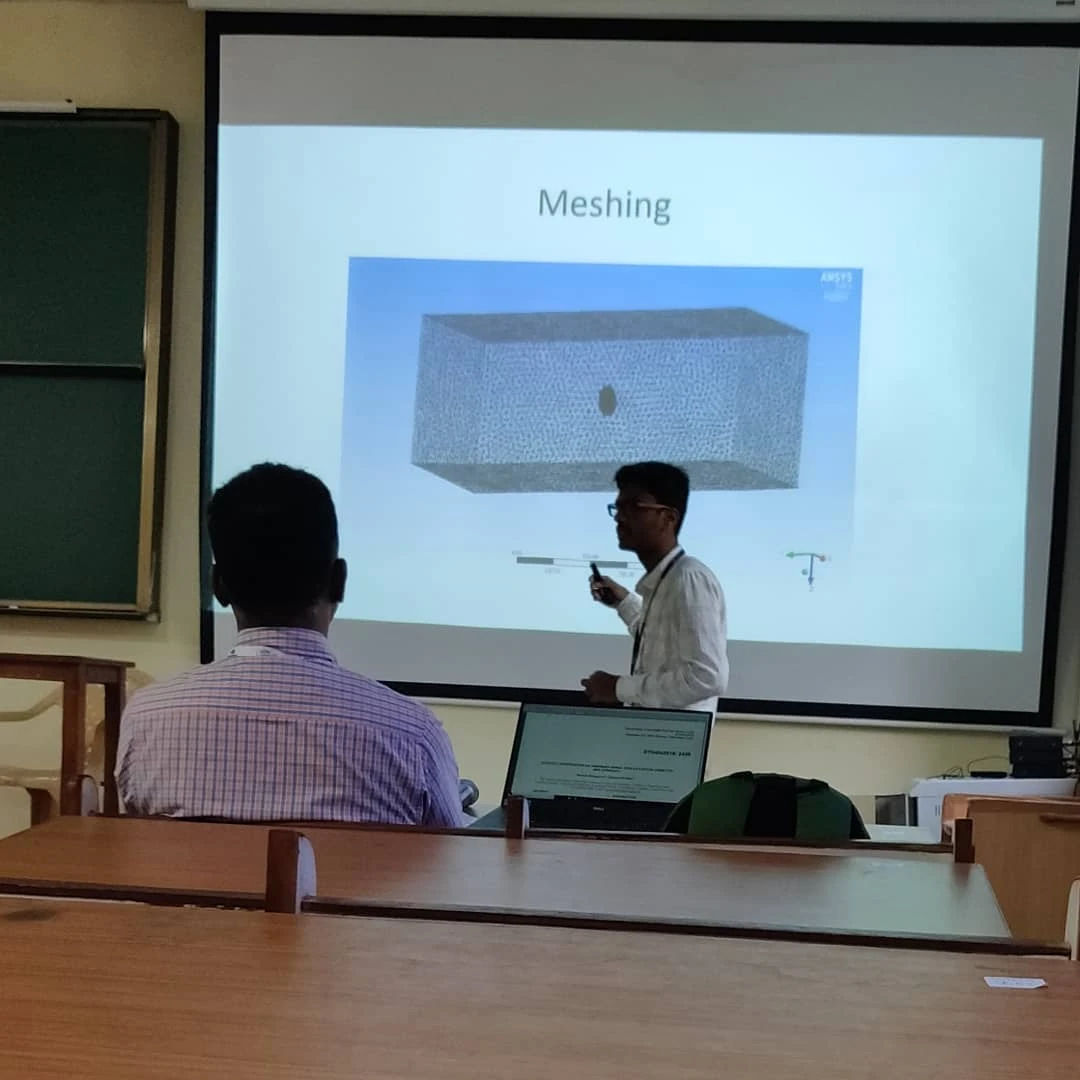
Ramesh explaining a CFD mesh during a technical presentation
TECHNICAL COMMUNICATIONMeshing and CFD talkExplaining meshing and CFD methods to a technical audience.
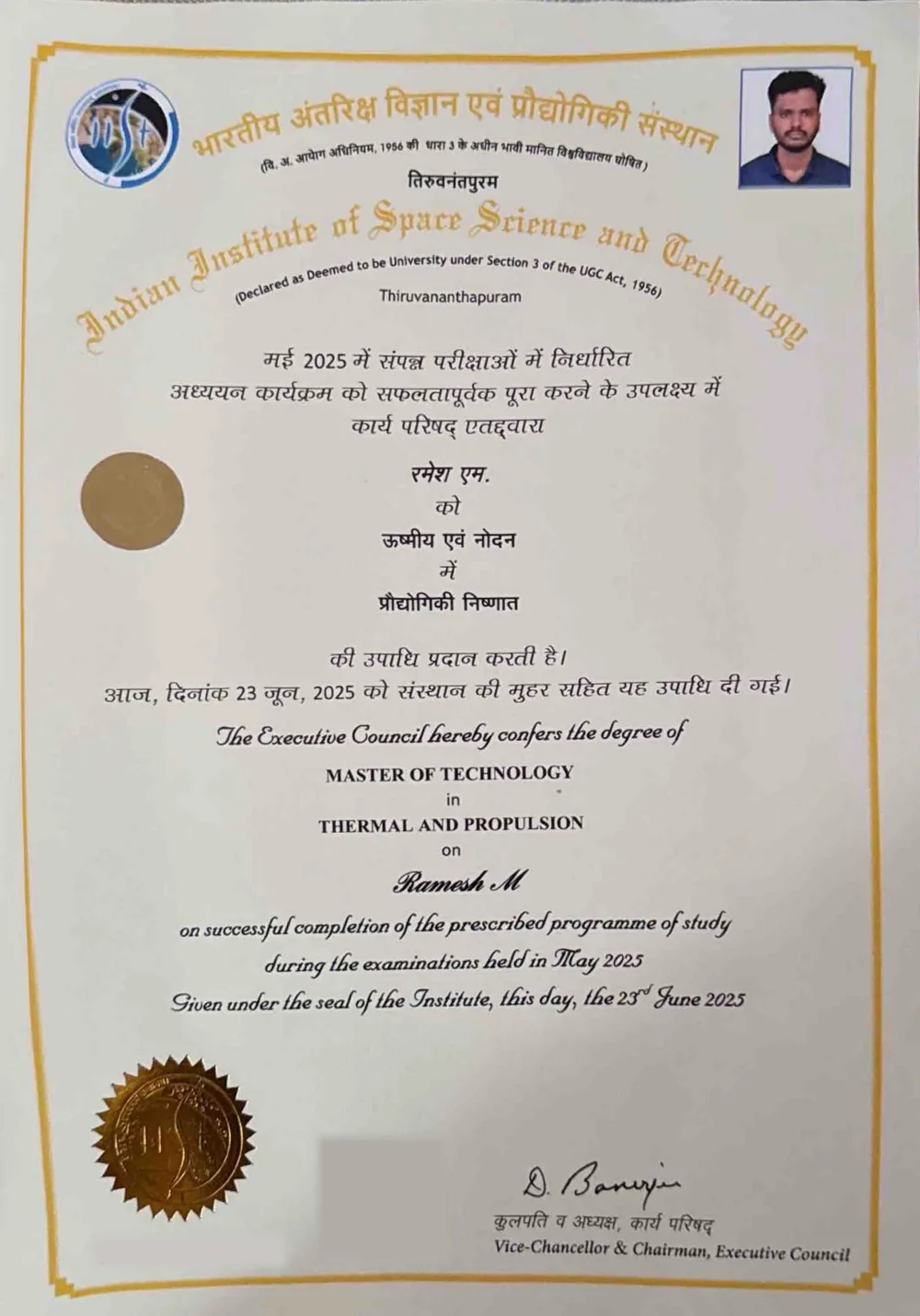
IIST Master of Technology degree certificate in Thermal and Propulsion, with identification numbers removed
IIST · 2025MTech, Thermal and PropulsionConferred by the Indian Institute of Space Science and Technology, Thiruvananthapuram, on 23 June 2025.View the degree certificate ↗
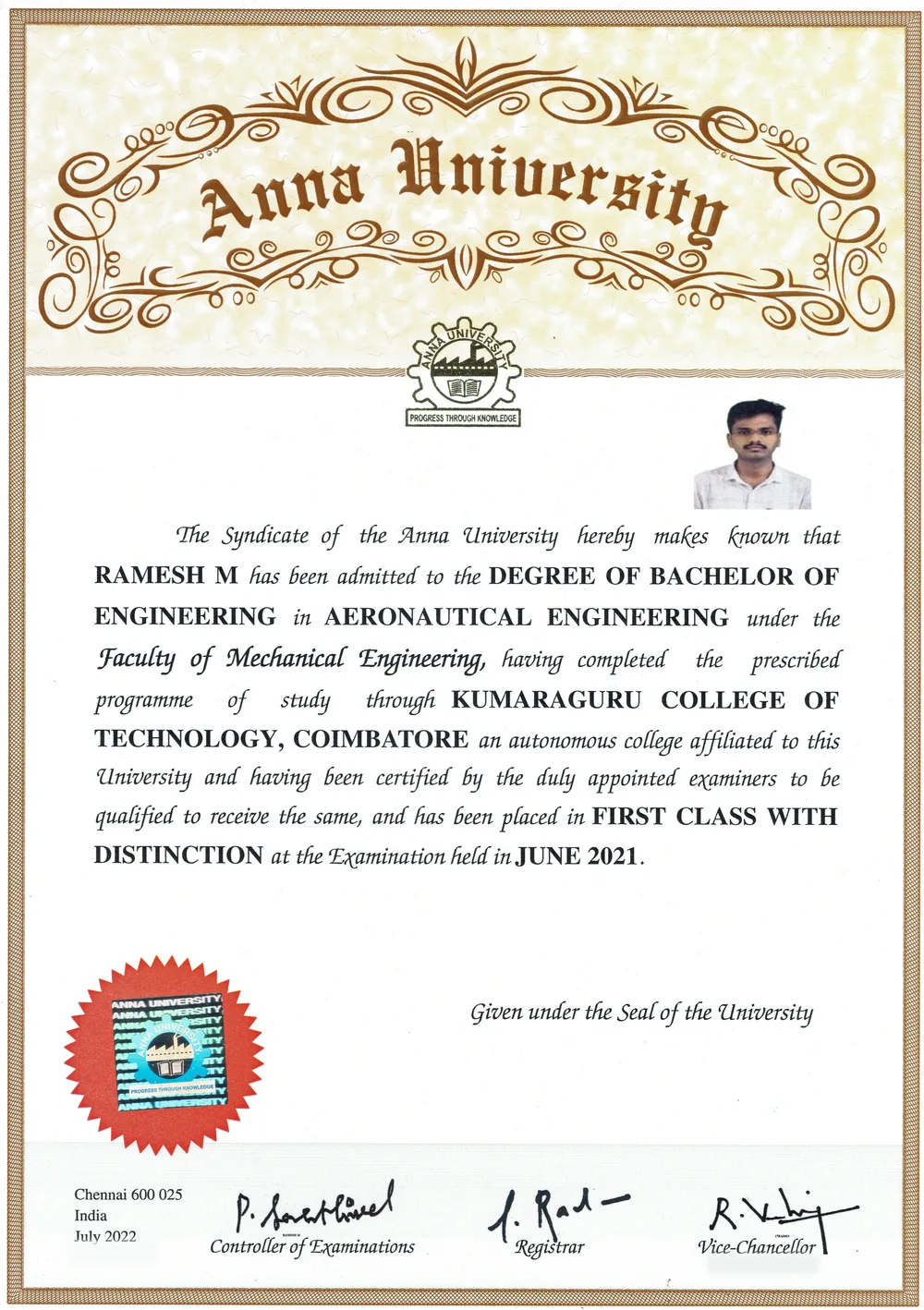
Anna University Bachelor of Engineering degree certificate in Aeronautical Engineering through Kumaraguru College of Technology, with identification numbers removed
ANNA UNIVERSITY · KCT · 2021B.E., Aeronautical EngineeringFirst Class with Distinction, studied at Kumaraguru College of Technology, Coimbatore. Examinations held in June 2021.View the degree certificate ↗

EARLIER PROJECTS (12)

Student and early-career work

Before propulsion and thermal systems: aircraft concepts, flow studies and building models. Selected projects from my earlier portfolio.

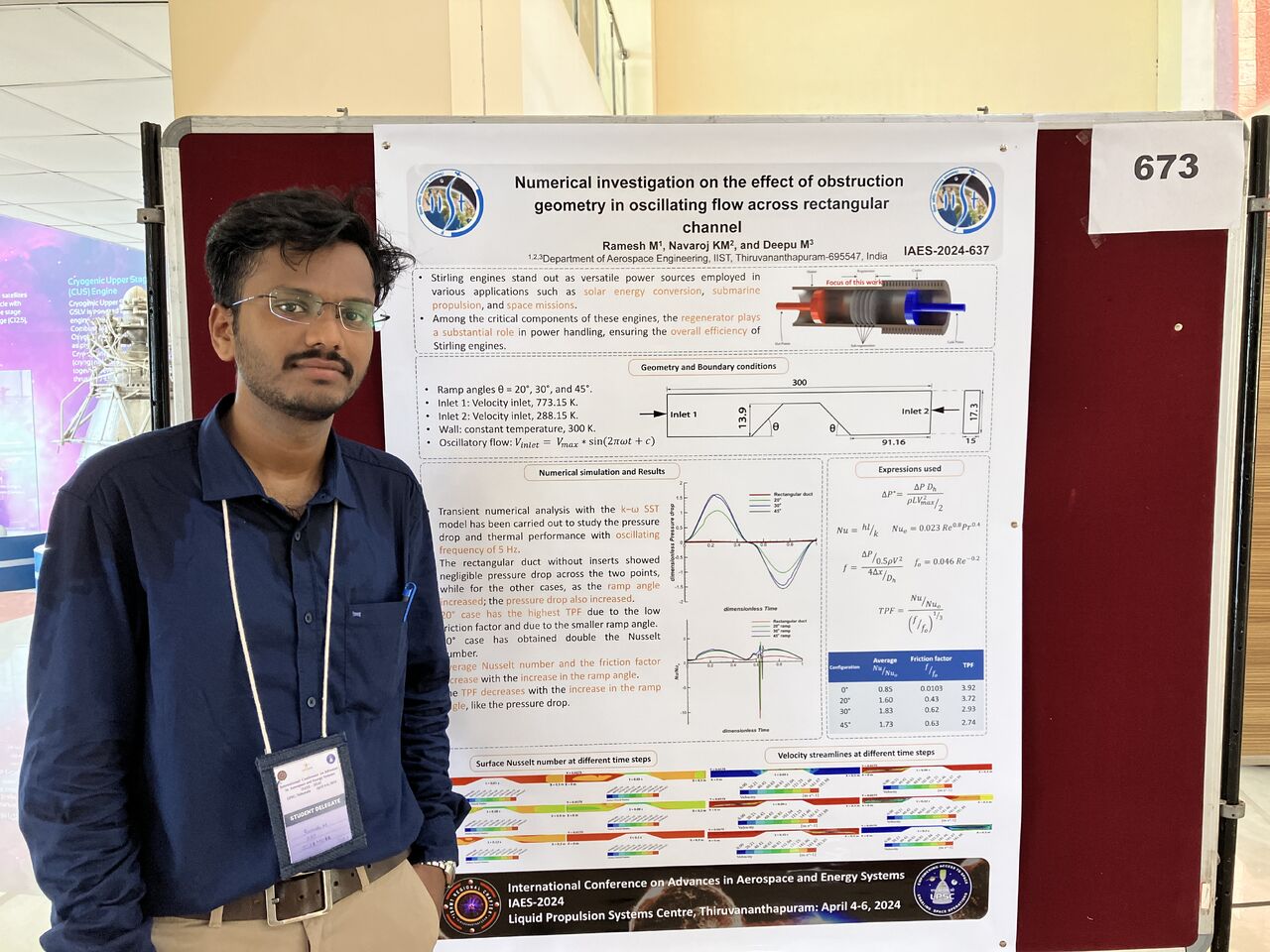
Oscillating flow poster presentation at IAES 2024Oscillating flow in a rectangular channel
At 5 Hz, how does the ramp angle affect pressure drop and heat transfer? We compared a clear channel with three obstruction geometries.

Poster photo · Published chapter ↗
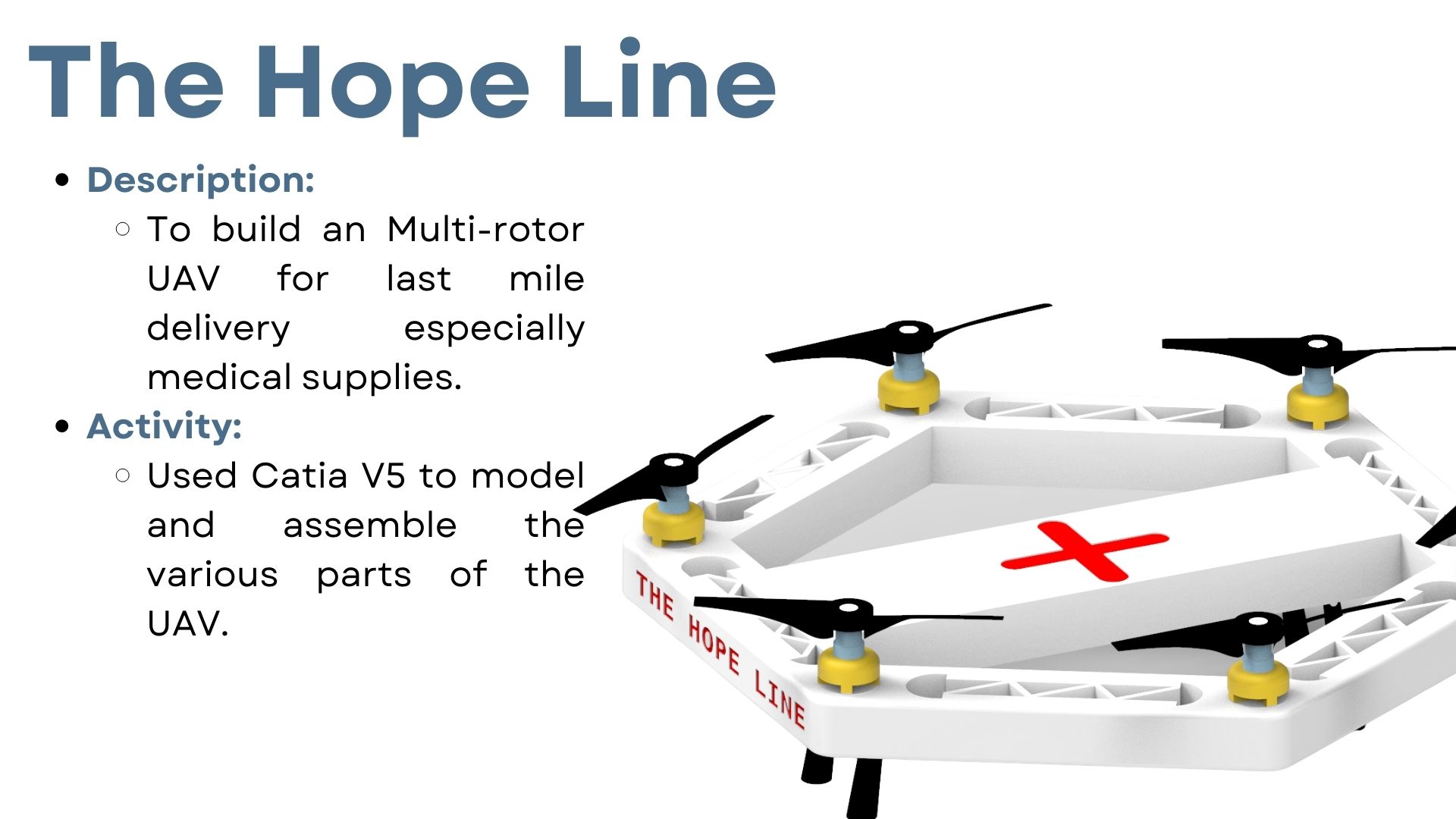
The Hope Line project previewThe Hope Line

A multi-rotor UAV concept for last-mile delivery of medical supplies. I modelled and assembled its parts in CATIA V5.

View deck · 22 slides
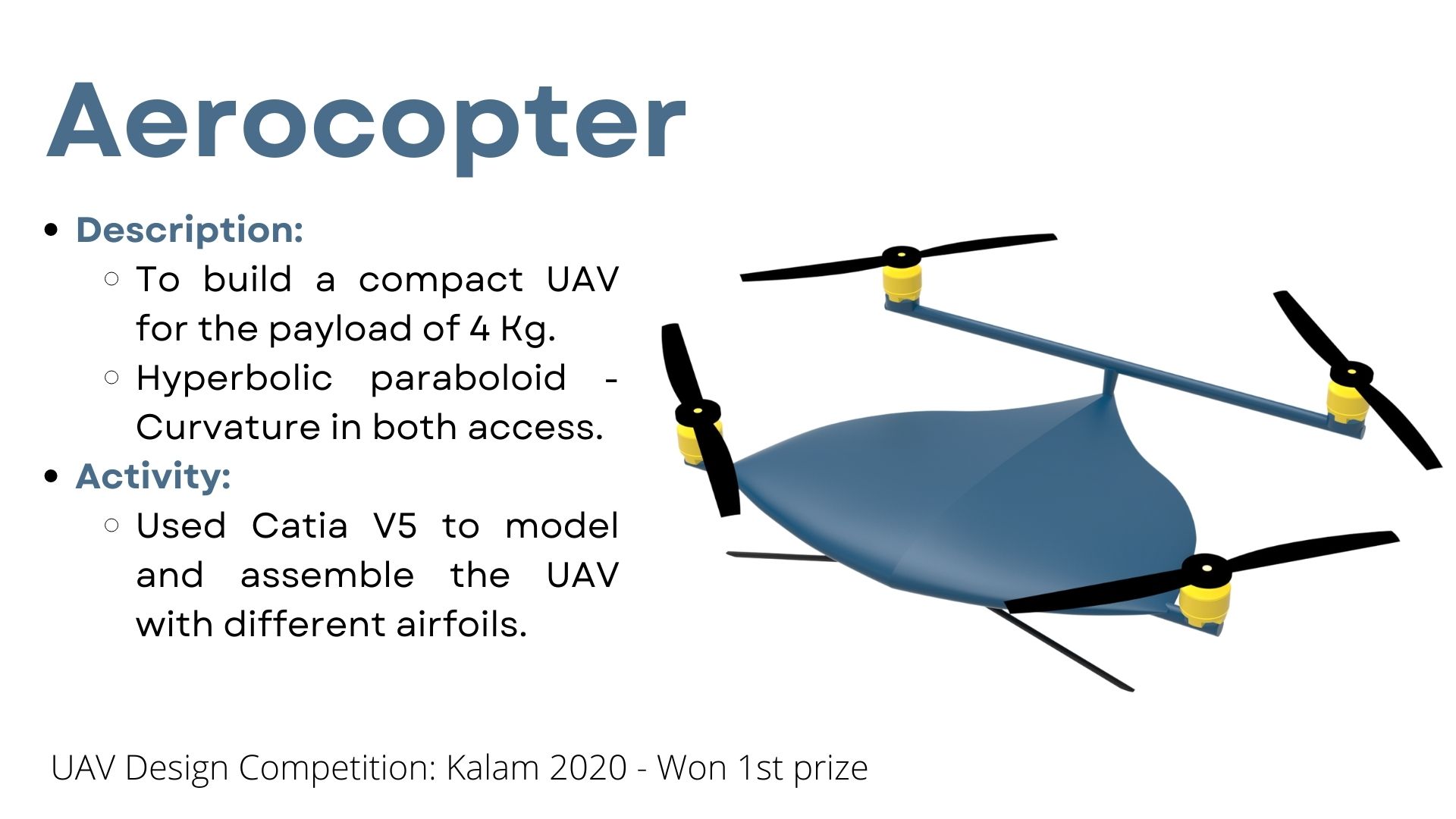
Aerocopter project previewAerocopter

A compact UAV sized for a 4 kg payload, built around a hyperbolic-paraboloid wing form. I modelled it with different airfoils in CATIA V5 — winner, UAV Design Competition, Kalam 2020.

View deck · 11 slides
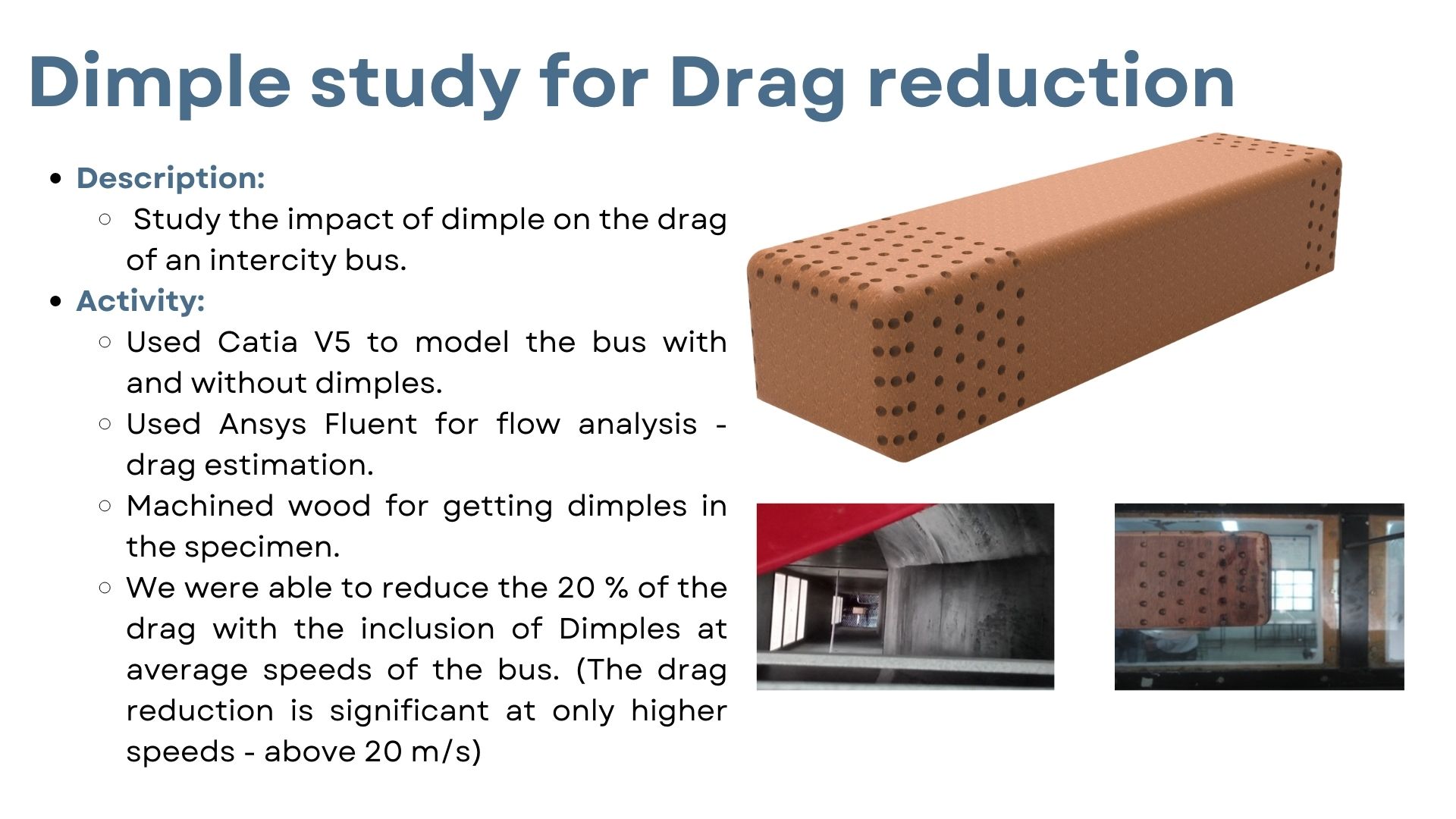
Dimple drag study project previewDimple drag study

Does dimpling the surface of an intercity bus cut aerodynamic drag? I modelled the bus with and without dimples in CATIA V5, ran Ansys Fluent flow analysis, and machined dimples into a wood test specimen — drag fell by up to 20%, most significantly above 20 m/s.

View deck · 18 slides
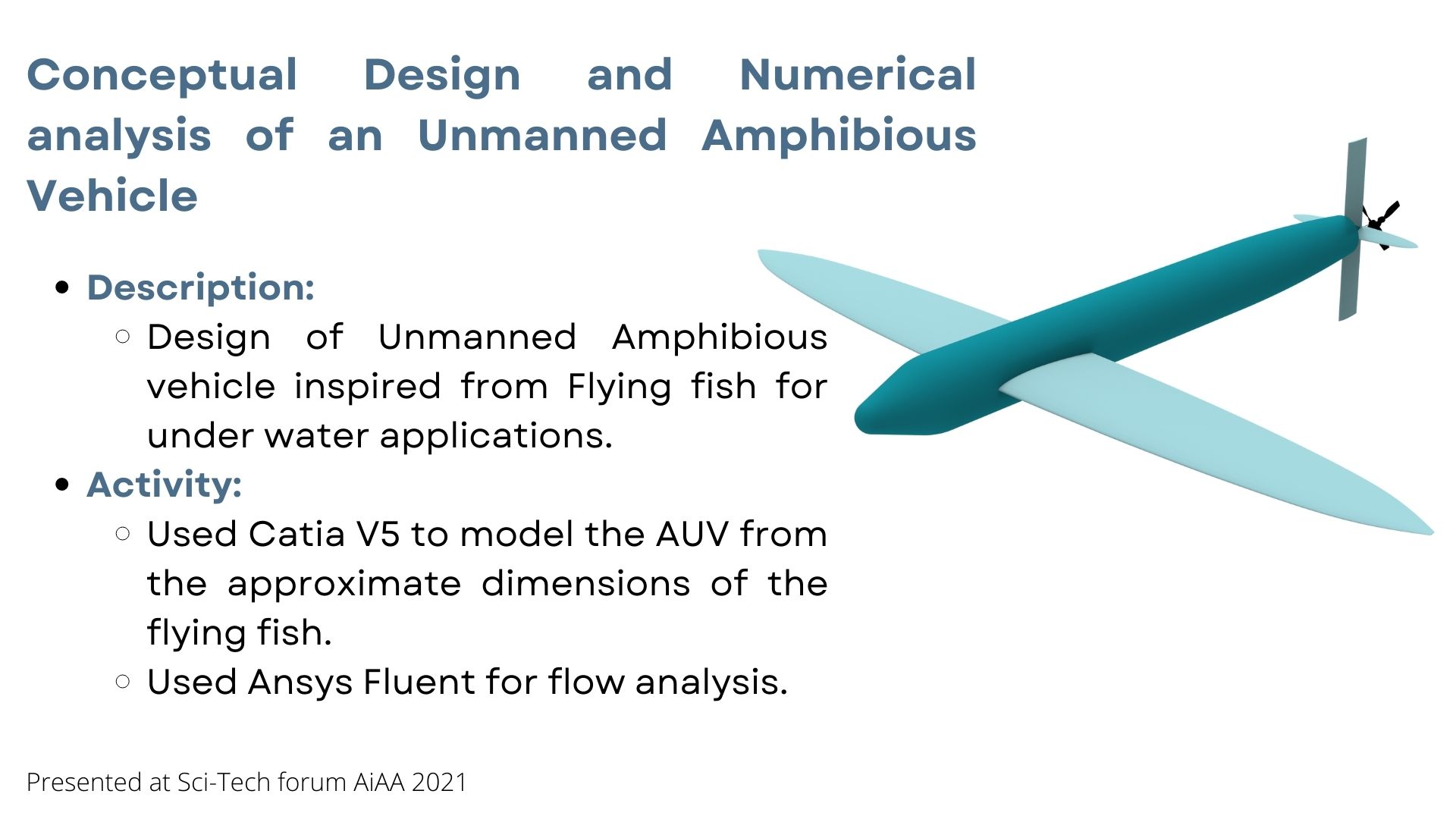
Amphibious vehicle project previewAmphibious vehicle

An unmanned amphibious vehicle inspired by the flying fish, for underwater applications. I modelled the AUV from the fish's approximate dimensions in CATIA V5 and ran Ansys Fluent flow analysis — presented at the AIAA SciTech forum, 2021.

View deck · 15 slides
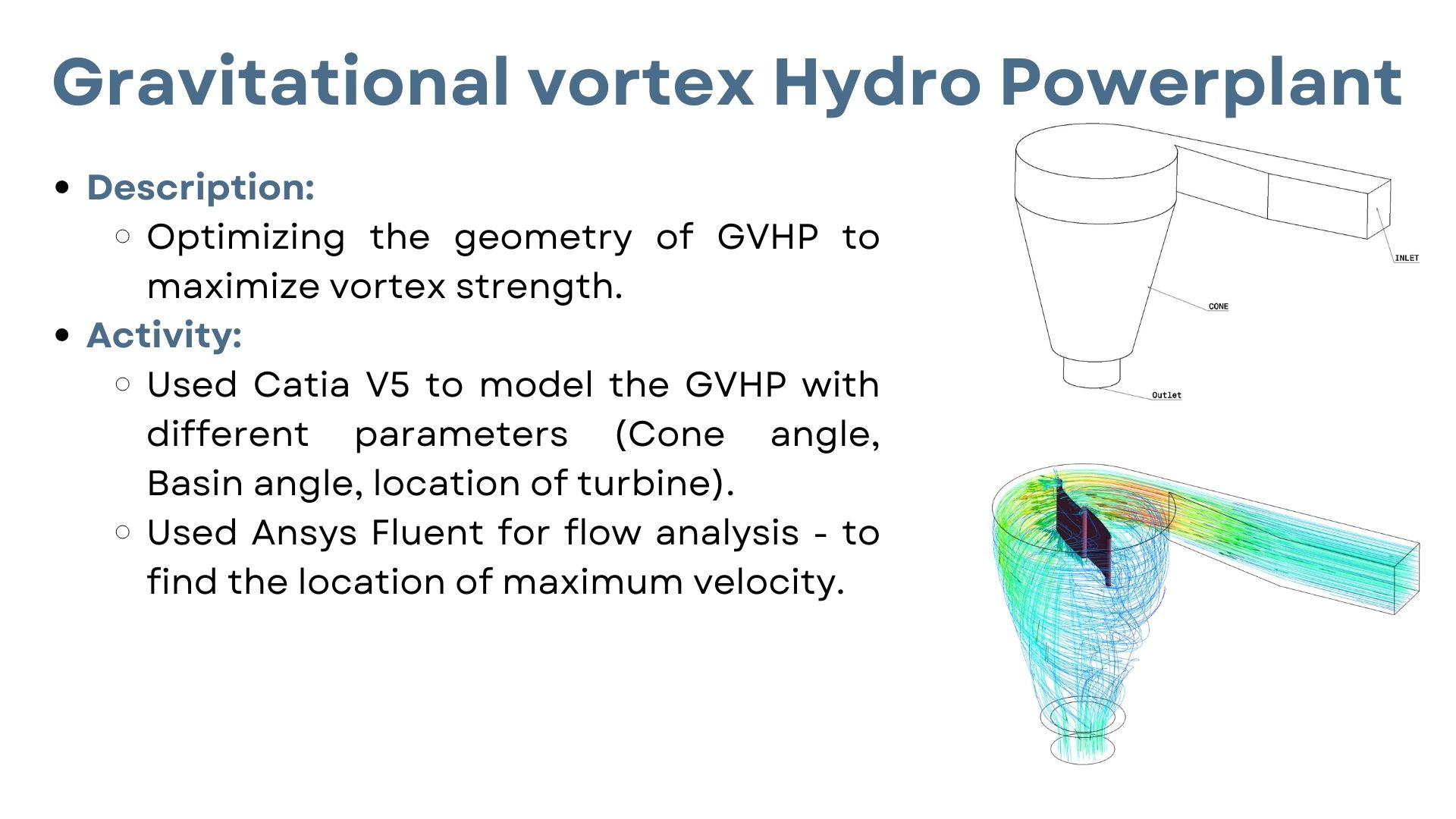
Gravitational vortex hydropower project previewGravitational vortex hydropower

Optimising a gravitational vortex hydropower plant's geometry for maximum vortex strength. I modelled cone angle, basin angle and turbine location in CATIA V5 and used Ansys Fluent to locate the point of maximum velocity — presented at NCMDAO 2020 (VSSC, ISRO).

View slide
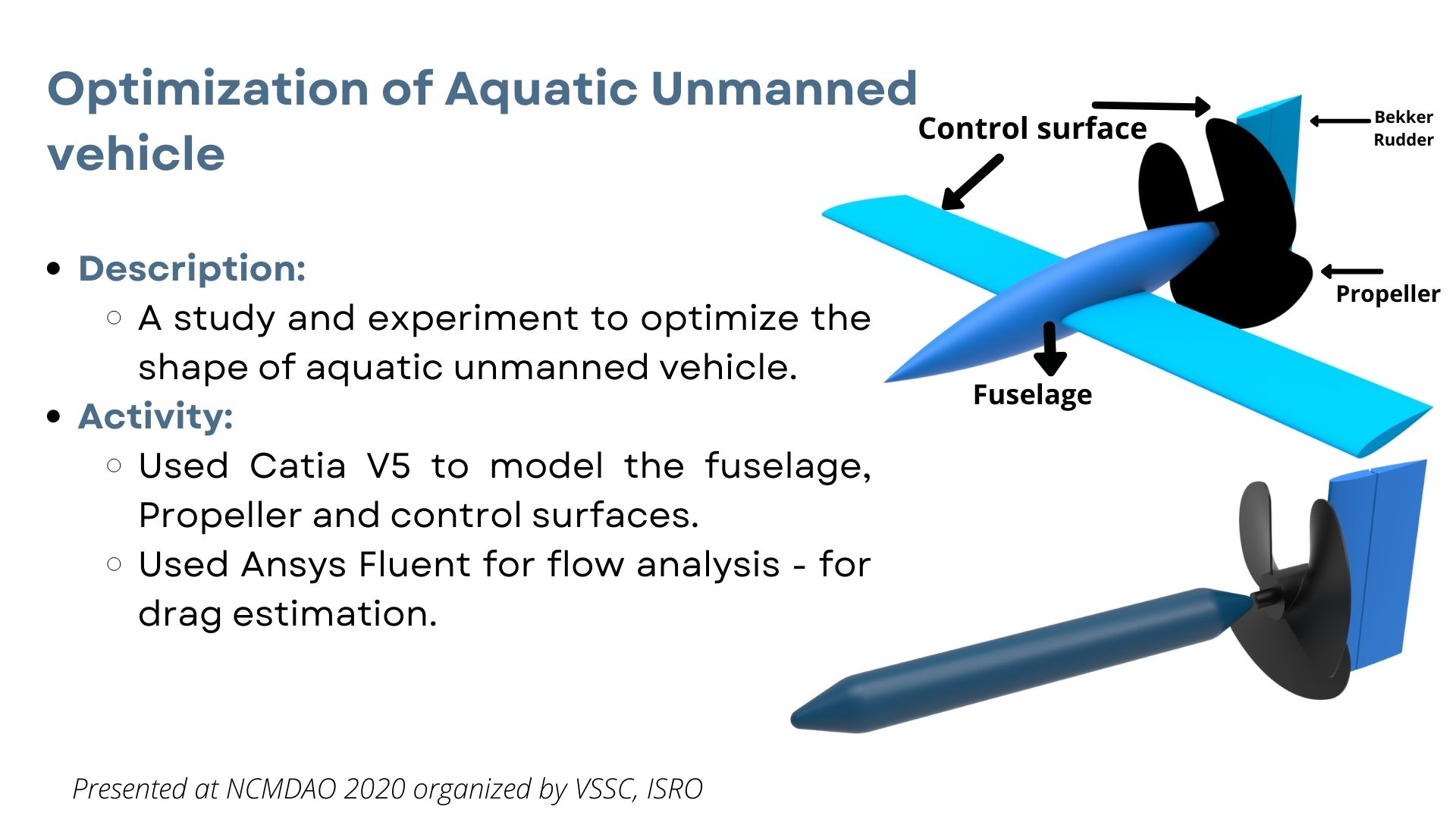
Aquatic unmanned vehicle project previewAquatic unmanned vehicle

A study to optimise the shape of an aquatic unmanned vehicle. I modelled the fuselage, propeller and control surfaces in CATIA V5 and ran Ansys Fluent flow analysis for drag estimation.

View slide
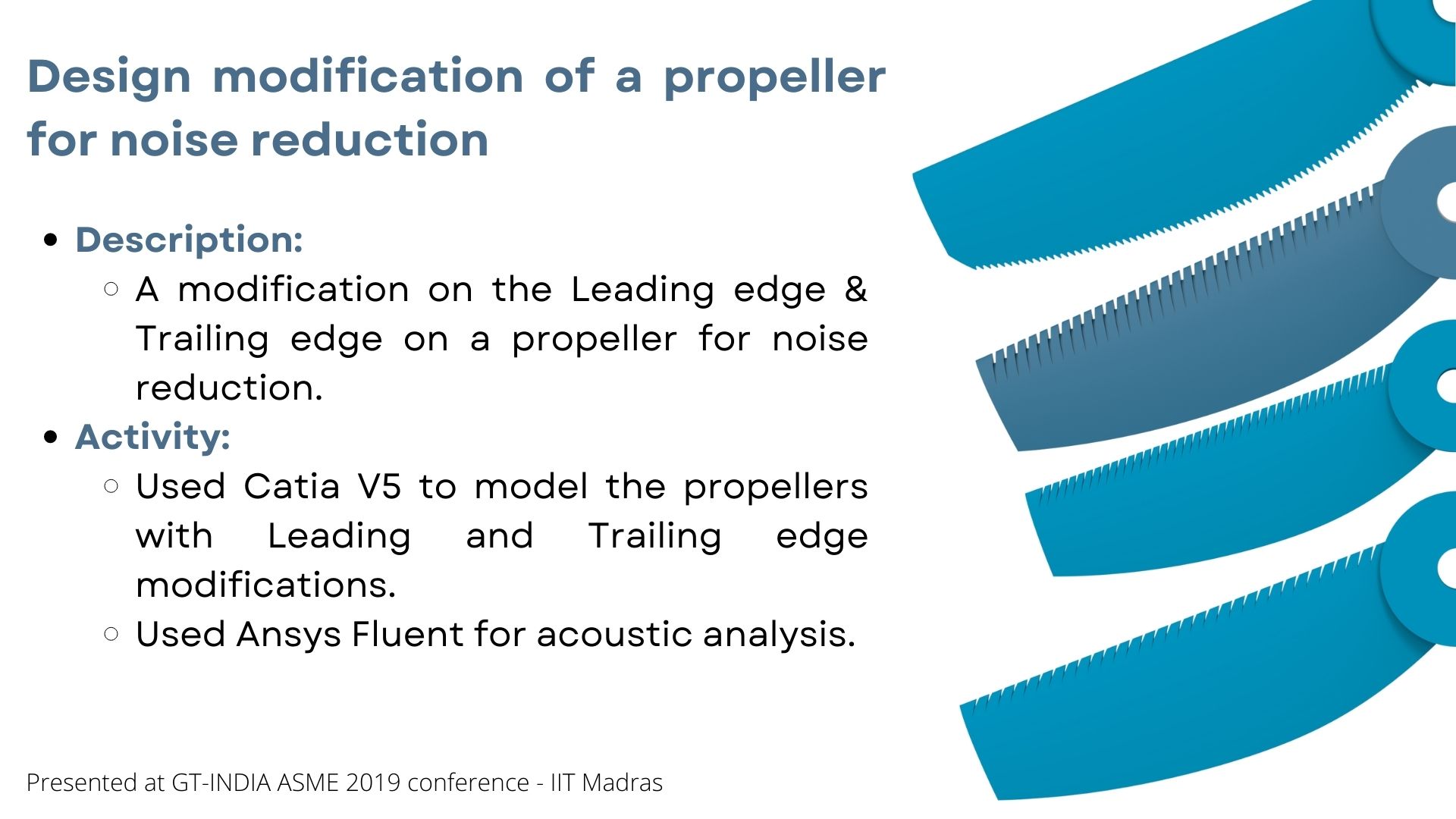
Acoustic propeller project previewAcoustic propeller

Modifying a propeller's leading and trailing edges to reduce noise. I modelled the variants in CATIA V5 and ran Ansys Fluent acoustic analysis — presented at the ASME GT India conference, IIT Madras, 2019.

View slide
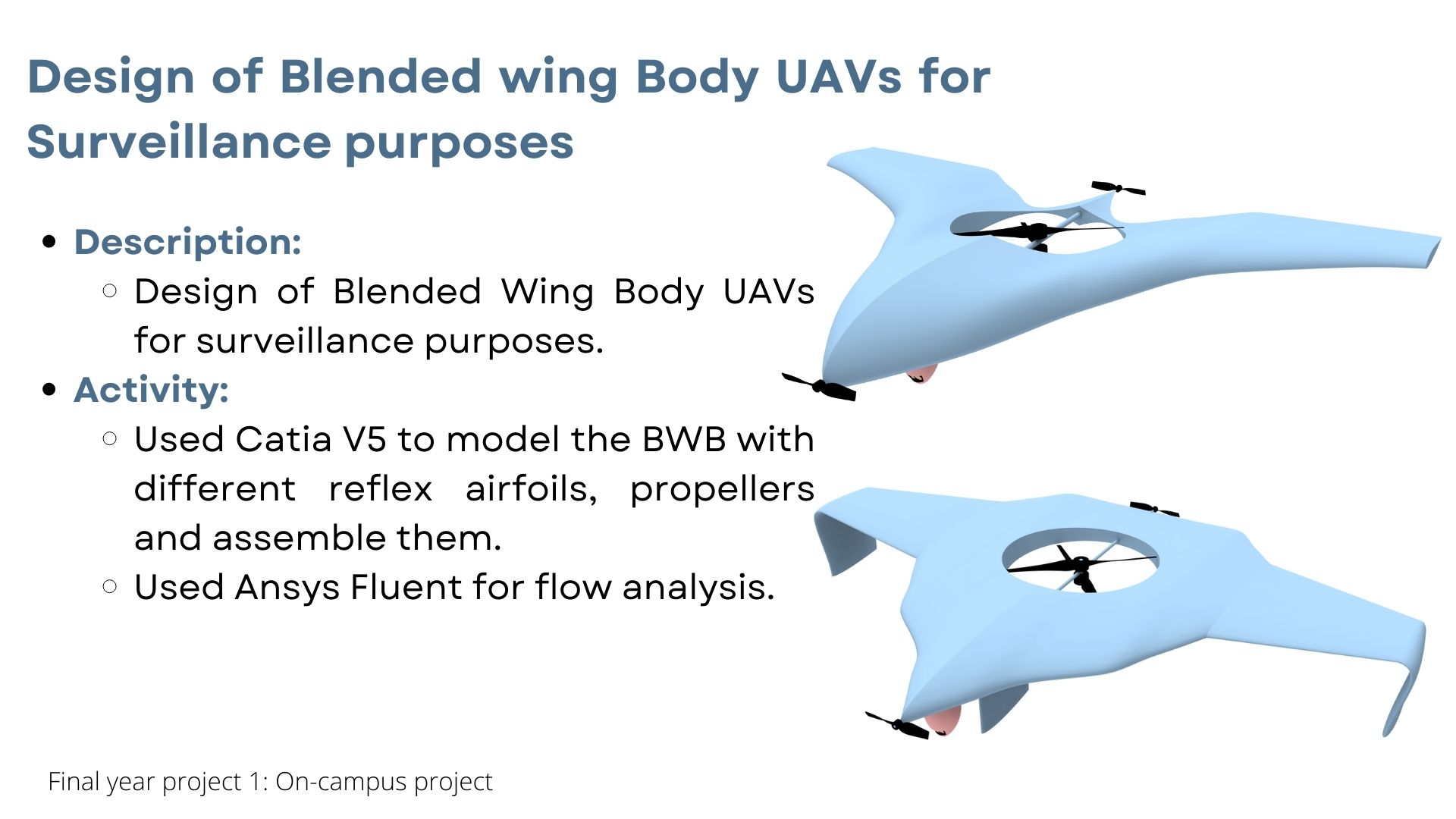
Blended wing body UAV project previewBlended wing body UAV

A blended-wing-body UAV concept for surveillance. I modelled it with different reflex airfoils and propellers in CATIA V5 and ran Ansys Fluent flow analysis — a final-year, on-campus project.

View slide
A321 radome project previewA321 radome

An external aerodynamic study of the A321, with and without its radome. I modelled the aircraft and radome at approximate dimensions in CATIA V5 and ran Ansys Fluent flow analysis — during an internship at CABS-DRDO, Bangalore.

View slide
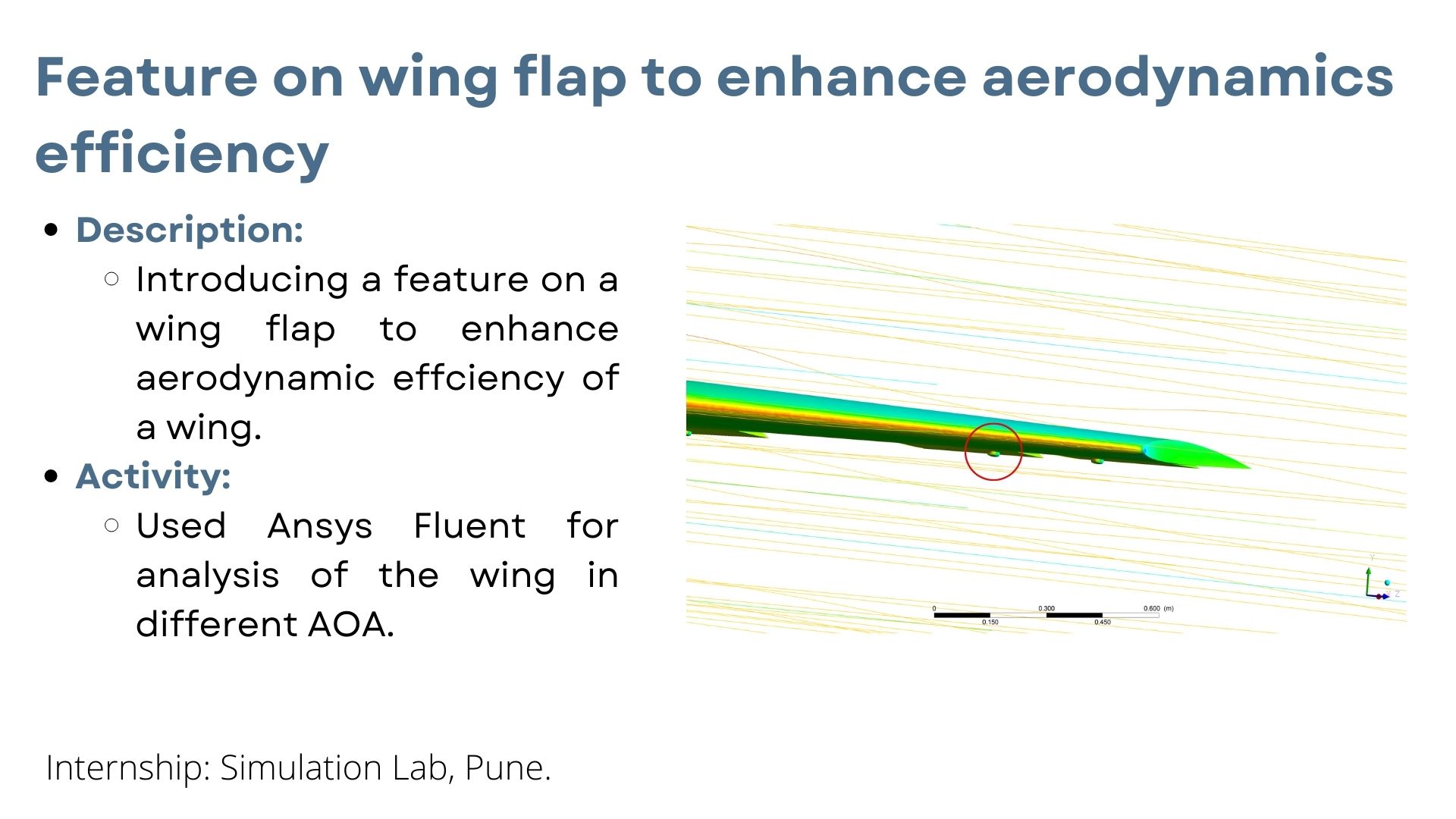
Wing flap project previewWing flap

Introducing a wing-flap feature to improve aerodynamic efficiency. I ran Ansys Fluent analysis of the wing across different angles of attack — during an internship at the Simulation Lab, Pune.

View slide
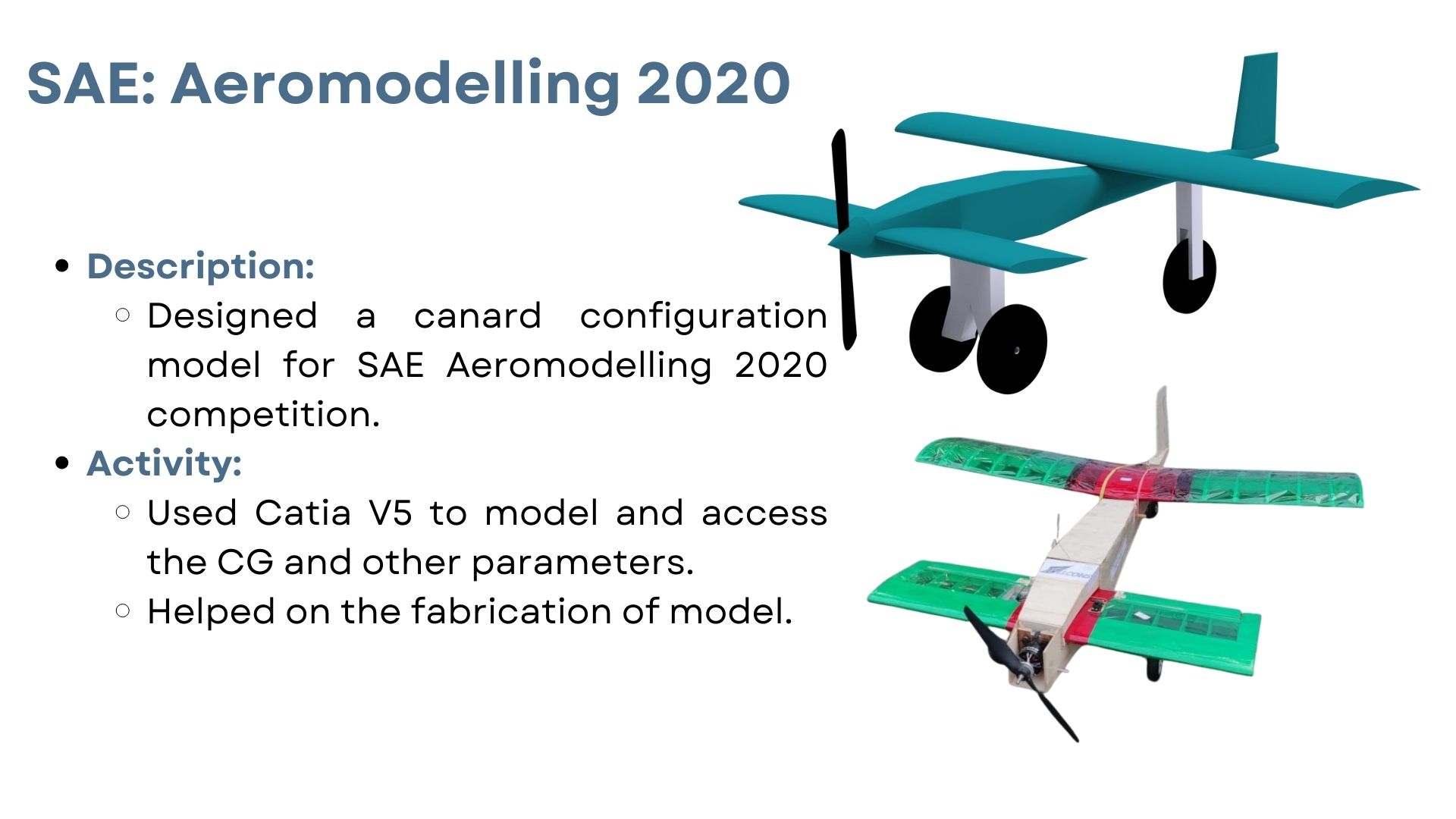
SAE Aeromodelling project previewSAE Aeromodelling

A canard-configuration aircraft for the SAE Aeromodelling 2020 competition. I modelled it and assessed centre of gravity and other parameters in CATIA V5, and helped fabricate the model.

View slide

Publications (15)

WRITING

Notes on university life and technology

I also write about learning, university life and the ideas that catch my attention.

Read my university reflections →Explore the writing archive →

CONTACT

Get in touch

For propulsion, thermal-fluid or CFD work, email me or review my resume.